YOTEI KIKUYA
Narrative Artist


| Purpose: | School Project |
| Role: | Lead Artist, Lead Animator, Game Engine Consultant, Programming Assistant |
| Category: | Visual Novel |
| Software: | Krita, GDevelop, Figma |
| Date: | 21/10/2025 - 03/12/2025 |
| Teammates: | Laraine Sim, Caitlin Kirkwood, Anica Li, John Rangel |
Choosing a Script
The project assignment was to adapt a screenplay of our choice, written by our peers in a previous project. Any medium was on the table, so my team assembled to develop a point-and-click adventure game. We chose to adapt The Innocent’s Descent by Anica Li and Justin Chan due to the explorative potential in a journey through Hell.
Building a New Hell
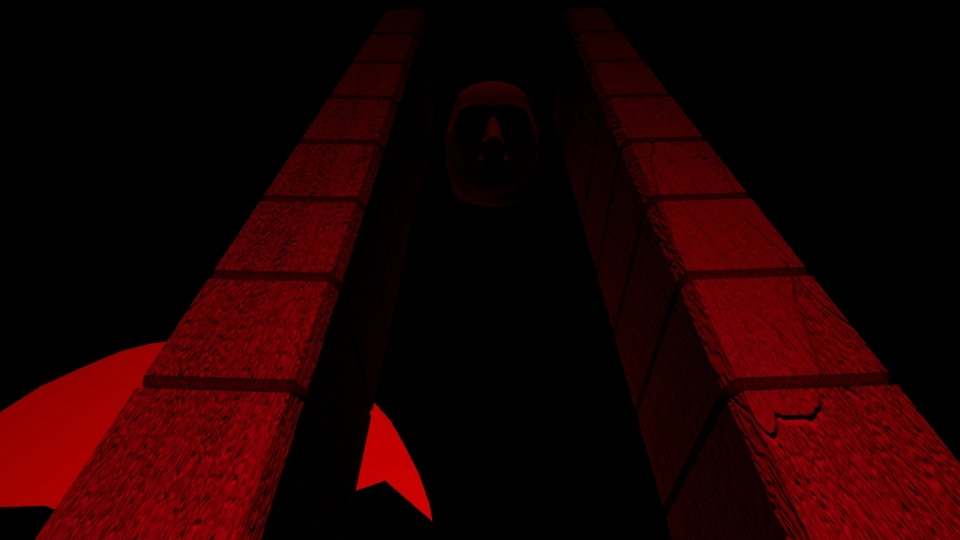
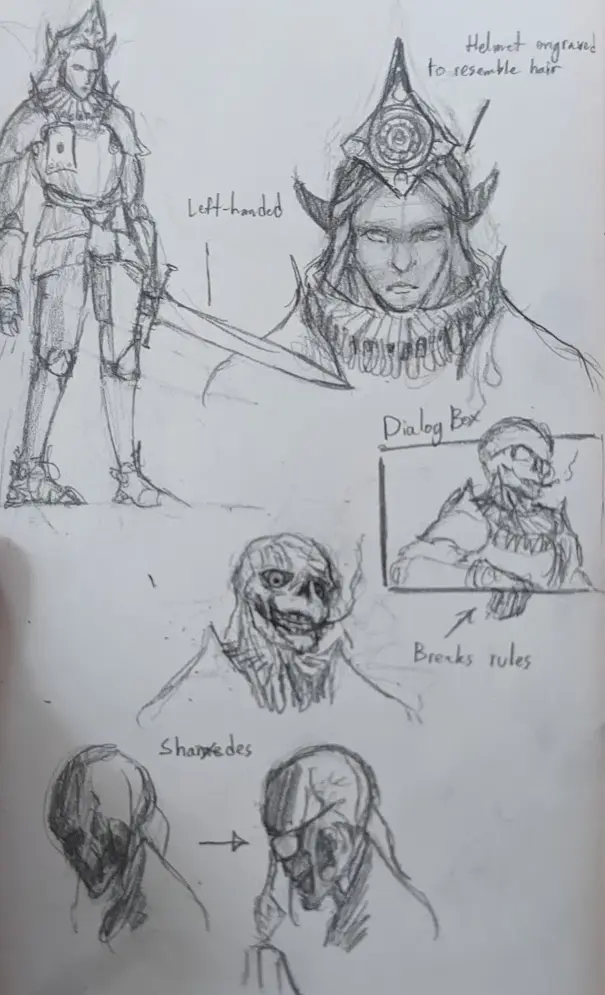
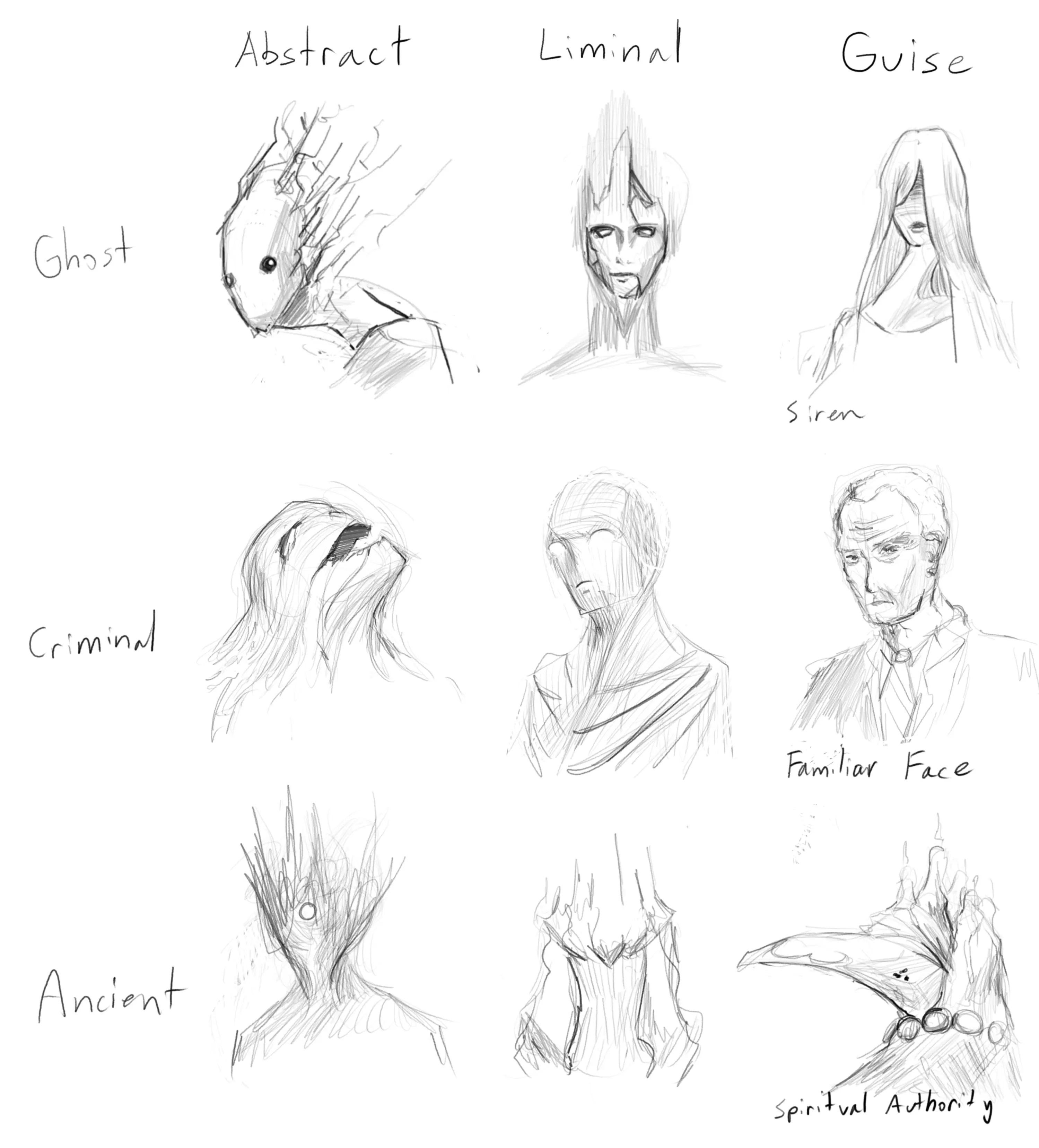
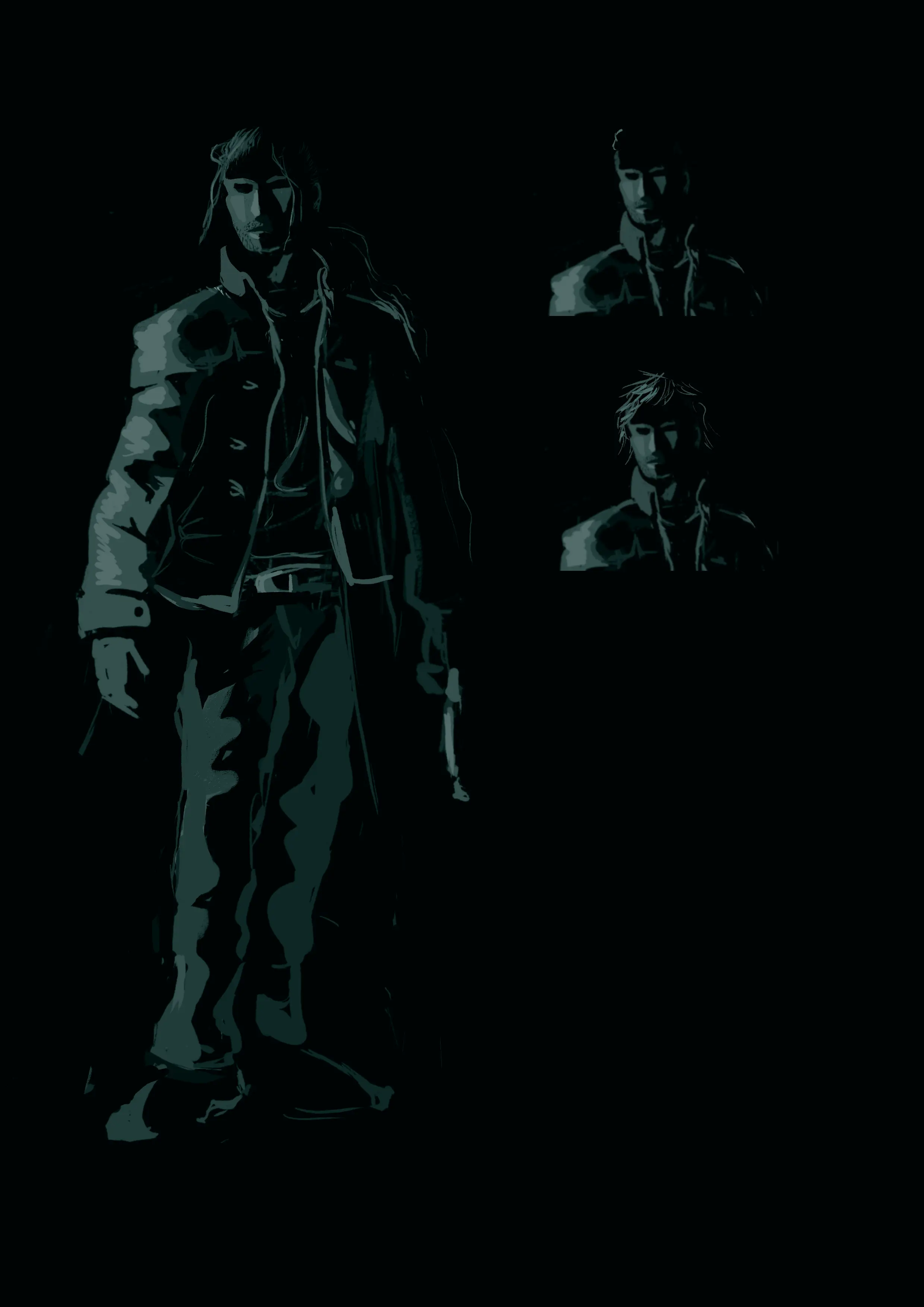
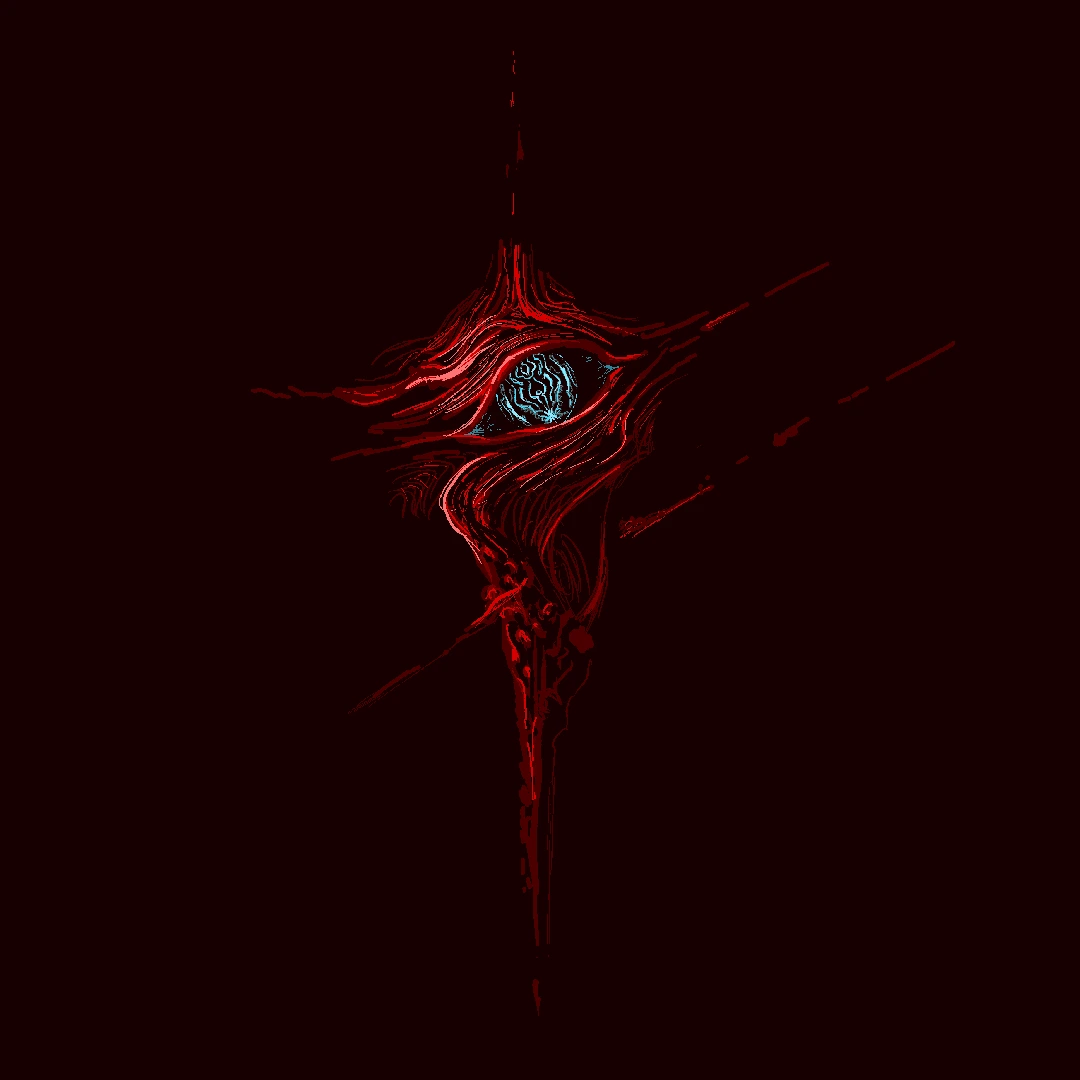
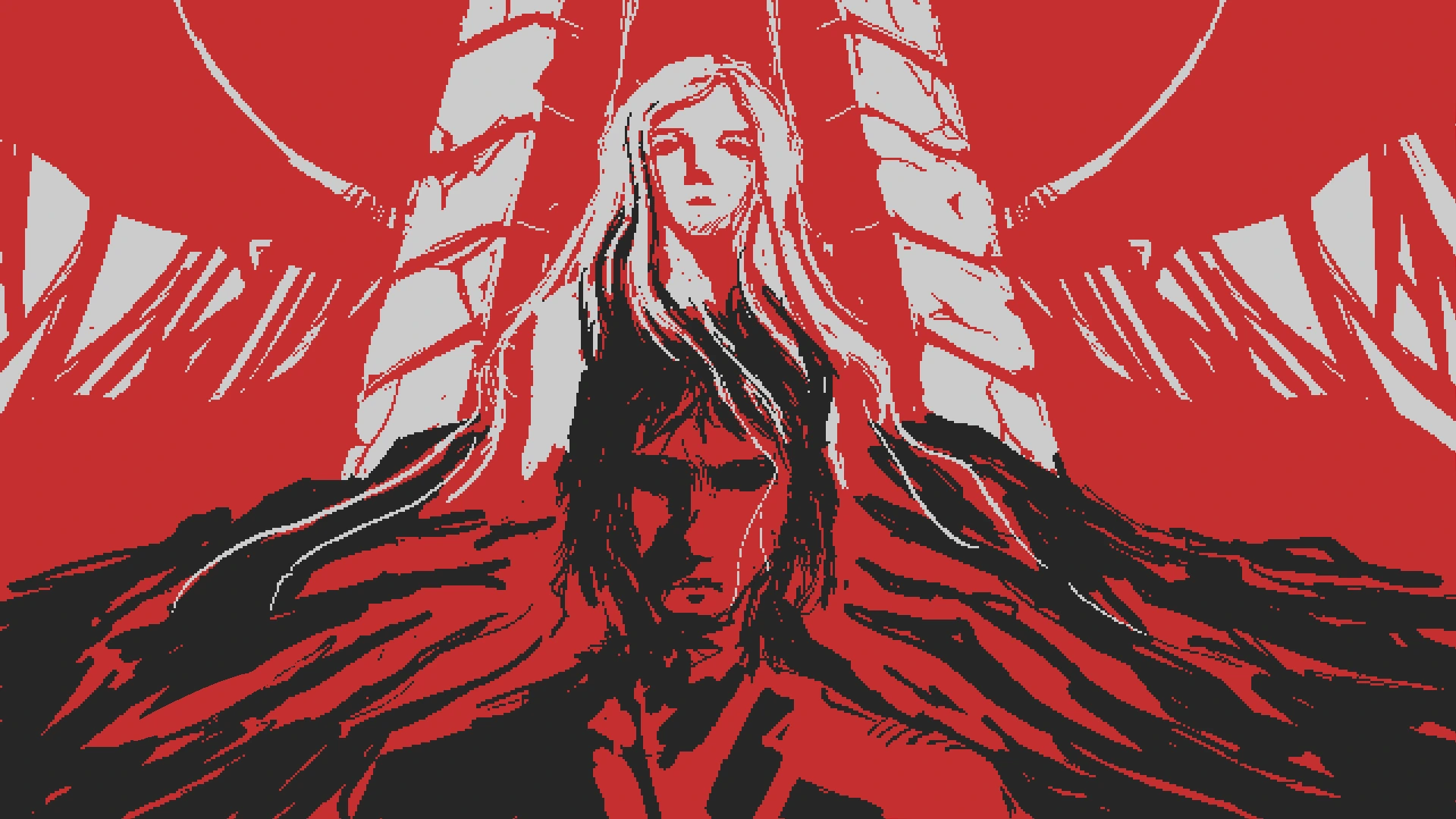
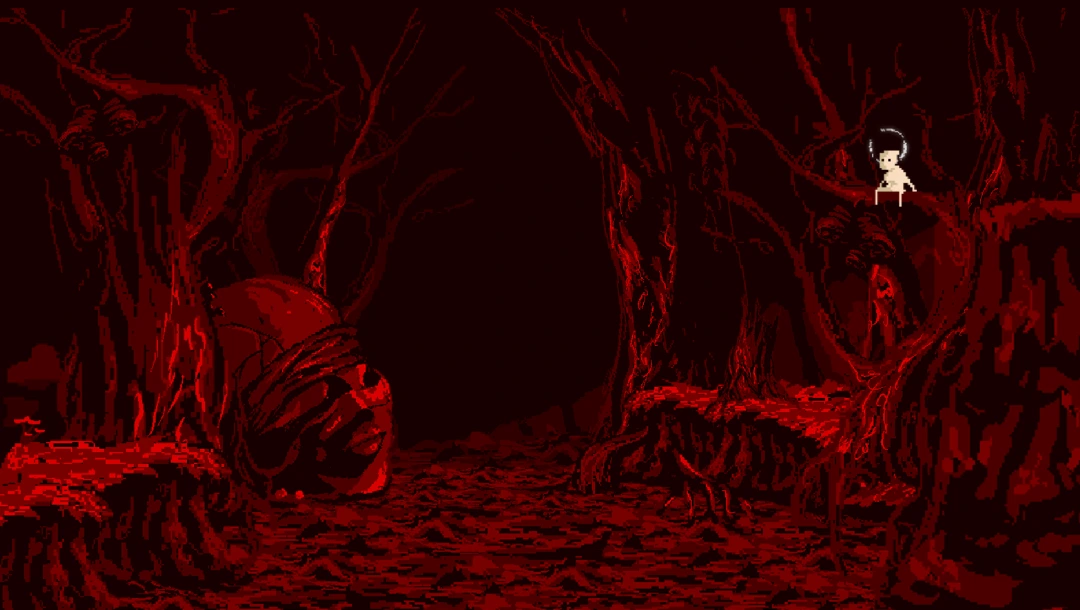
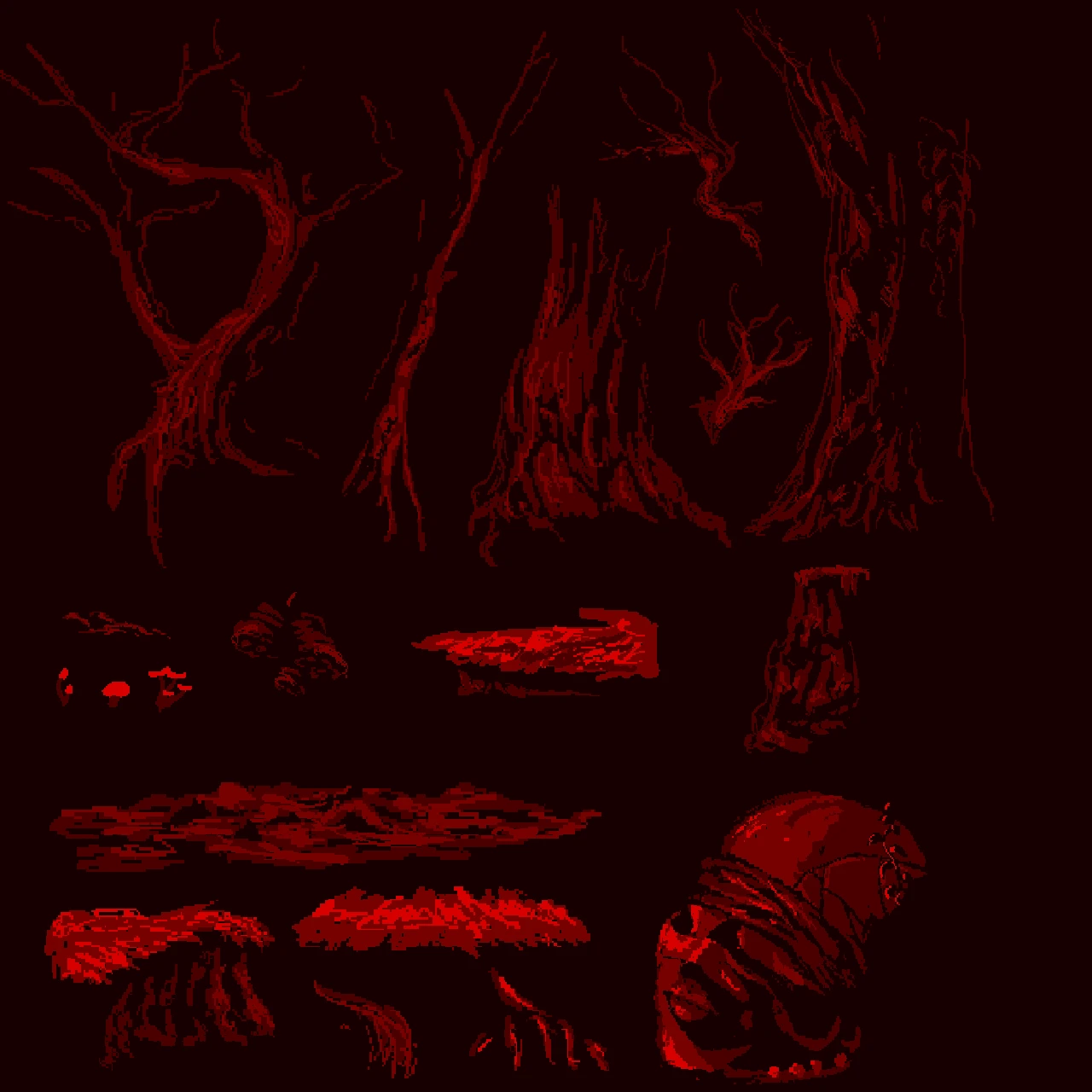
Right away, we assembled reference images of how we imagined the tone and style of the world and characters. Everyone in the team had some background in visual art, so at this early stage everyone wanted a say in the visual language. When I was put on as lead artist, my first task was to identify and consolidate recurring elements and design styles into a cohesive, distinct visual language. They key features I pinned down were heavy, dominating silhouettes, clear colour coding and a limited palette. Furthermore, since I was adapting this to a game, I decided to give Hell a more organic, rougher feel that suited more variety beyond arbitrarily separated rocky wastelands.
What Colour is Death?
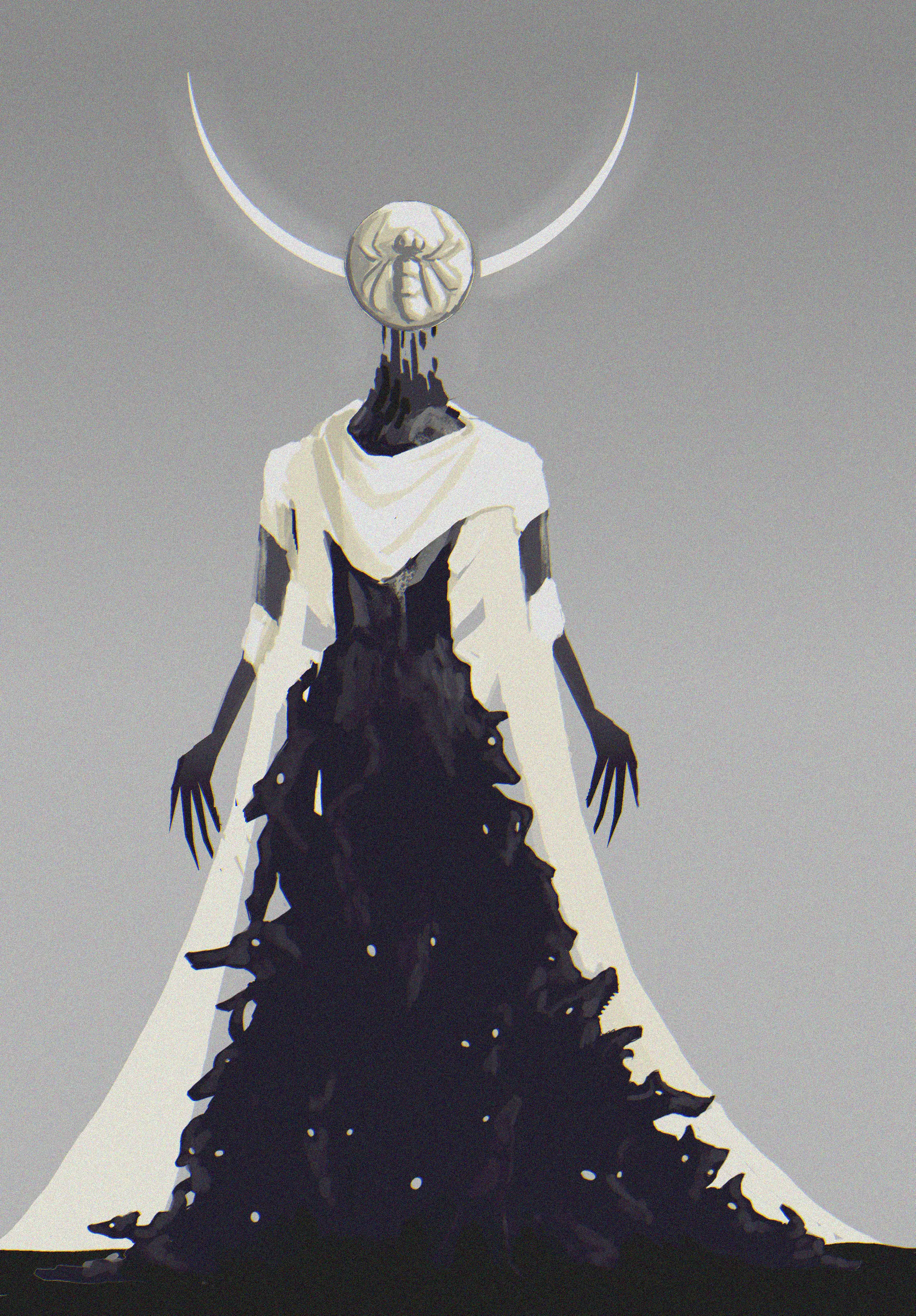
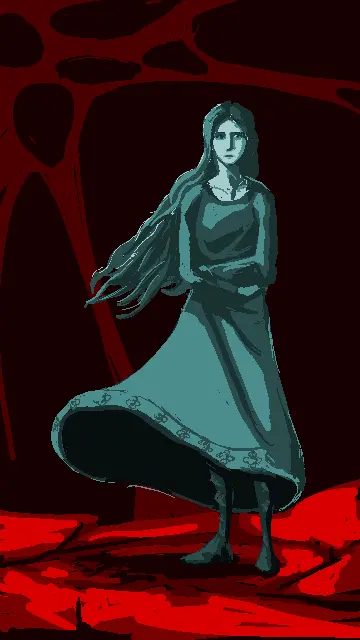
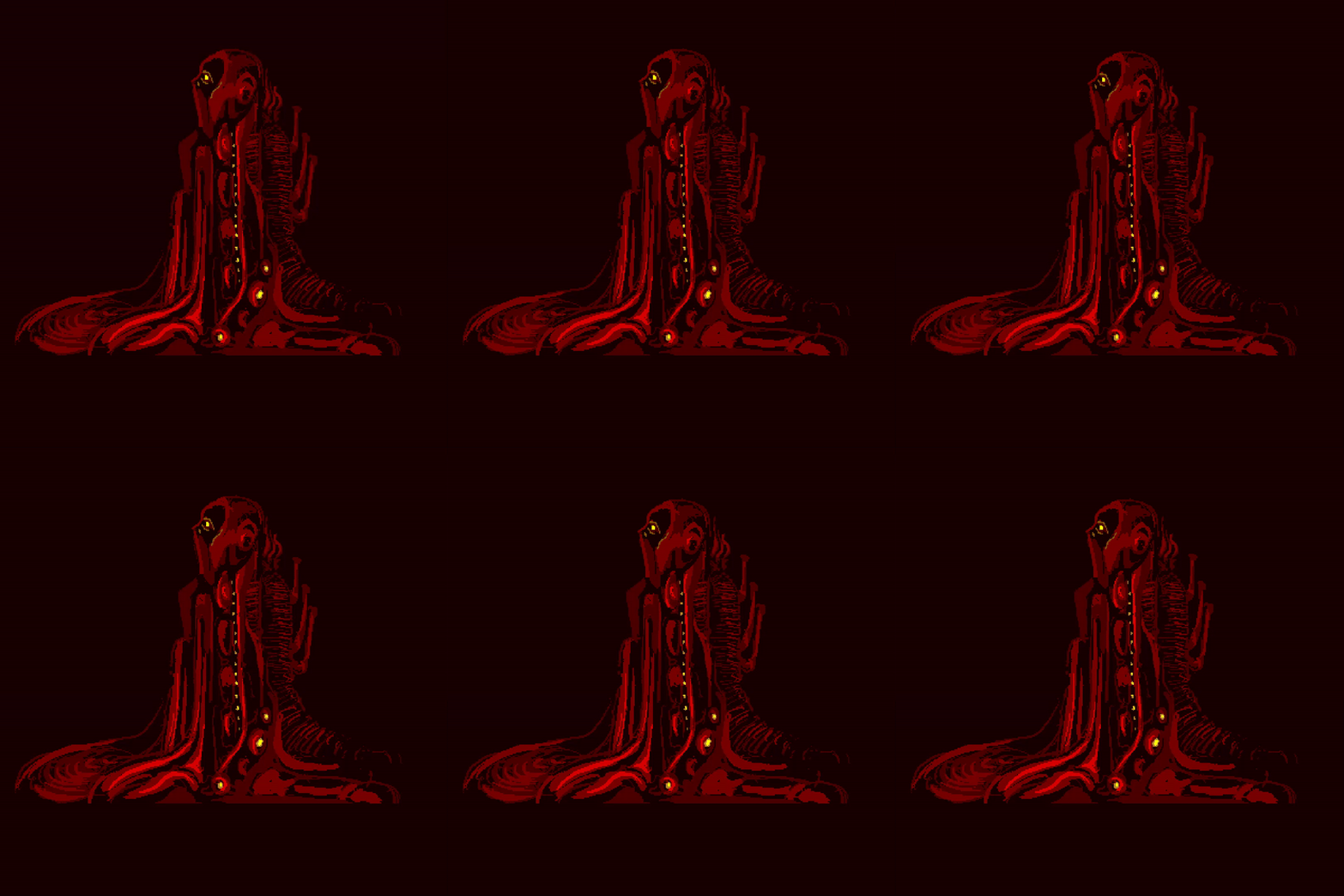
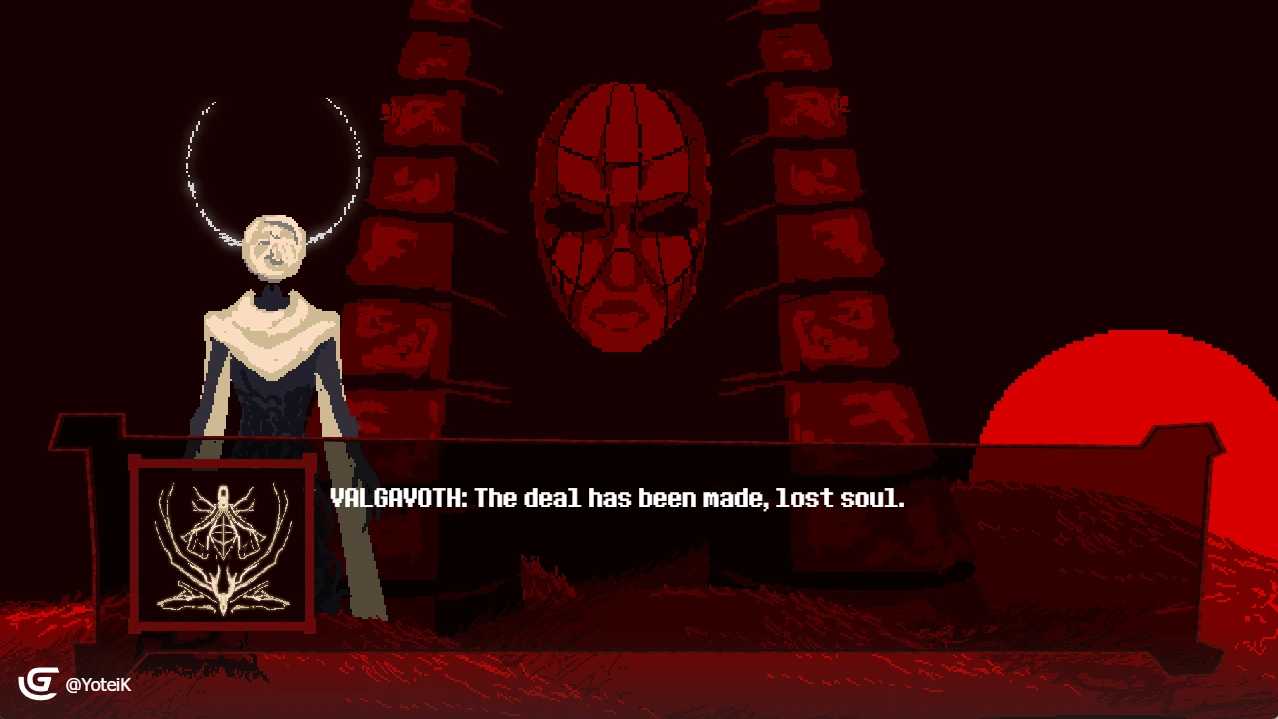
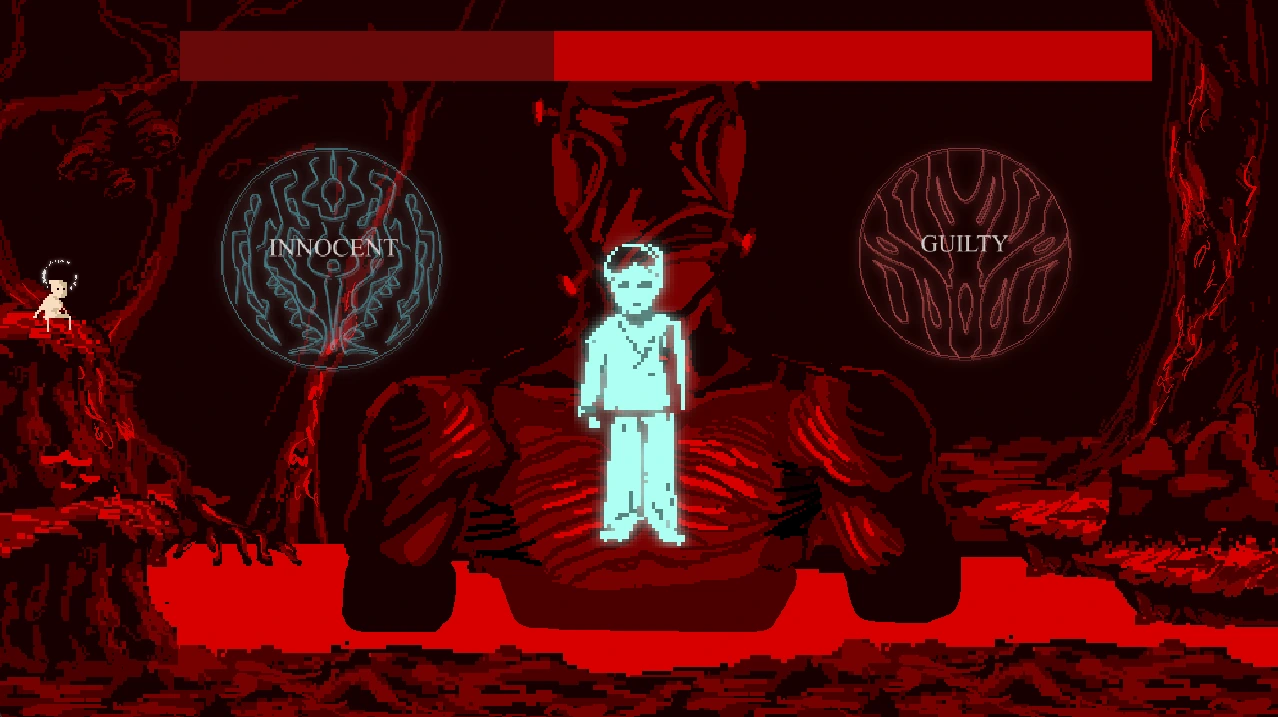
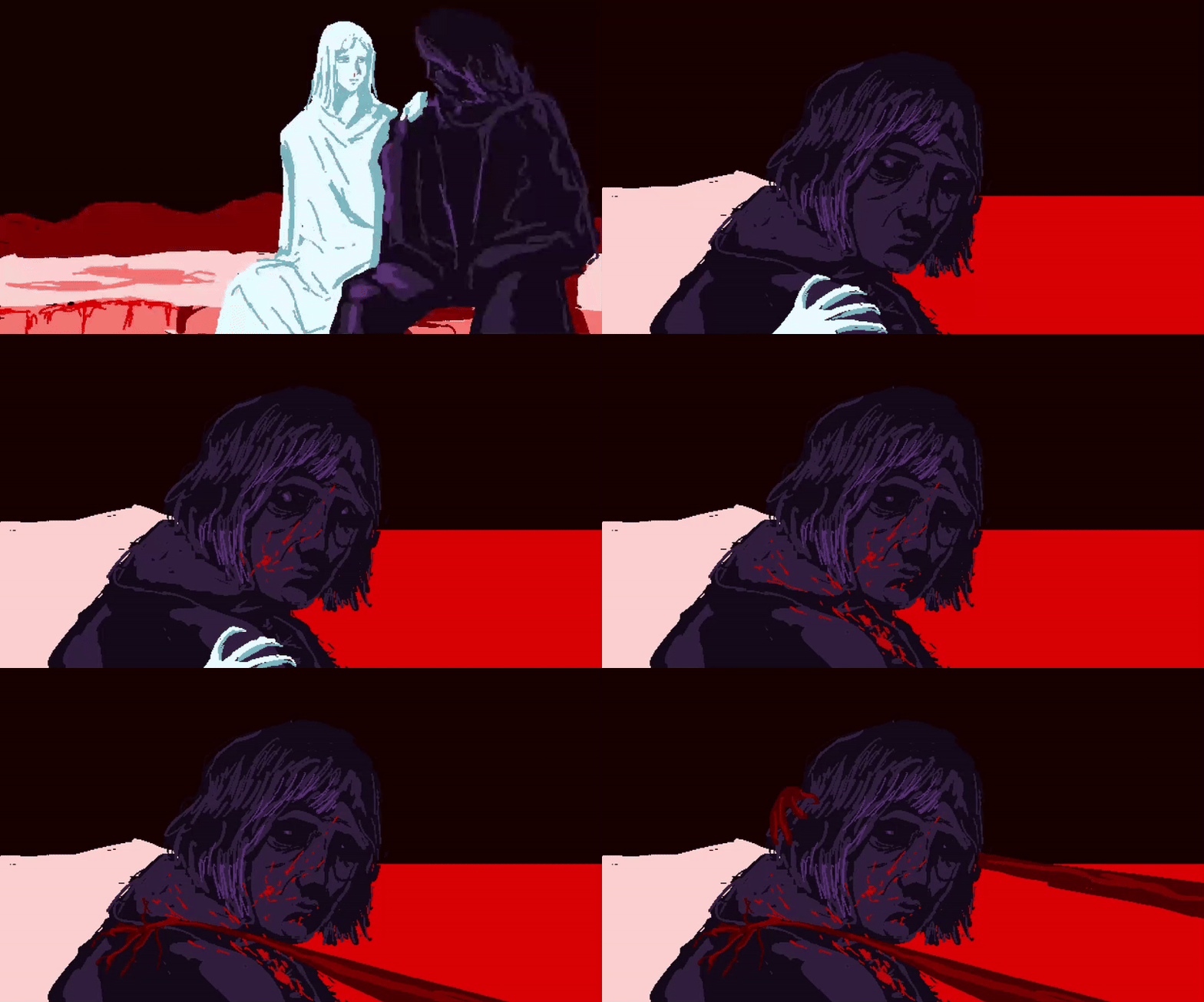
The most identifiable visual element of The Innocent’s Descent is its use of colour. Red was the baseline for Hell and all of its native entities. Rodion, the protagonist, is purple to represent his liminality. Valgavoth, Hell’s ruler, is a warm off-white to represent a being not native to this world but adopts it as best it can. René, Rodion’s lover, by contrast, is made up of blues and whites to resemble a ghost, someone completely out of place and perhaps intangible. Establishing this language first cut a large part of the design process down, so I could streamline asset output during development.
Rerouting Priorities
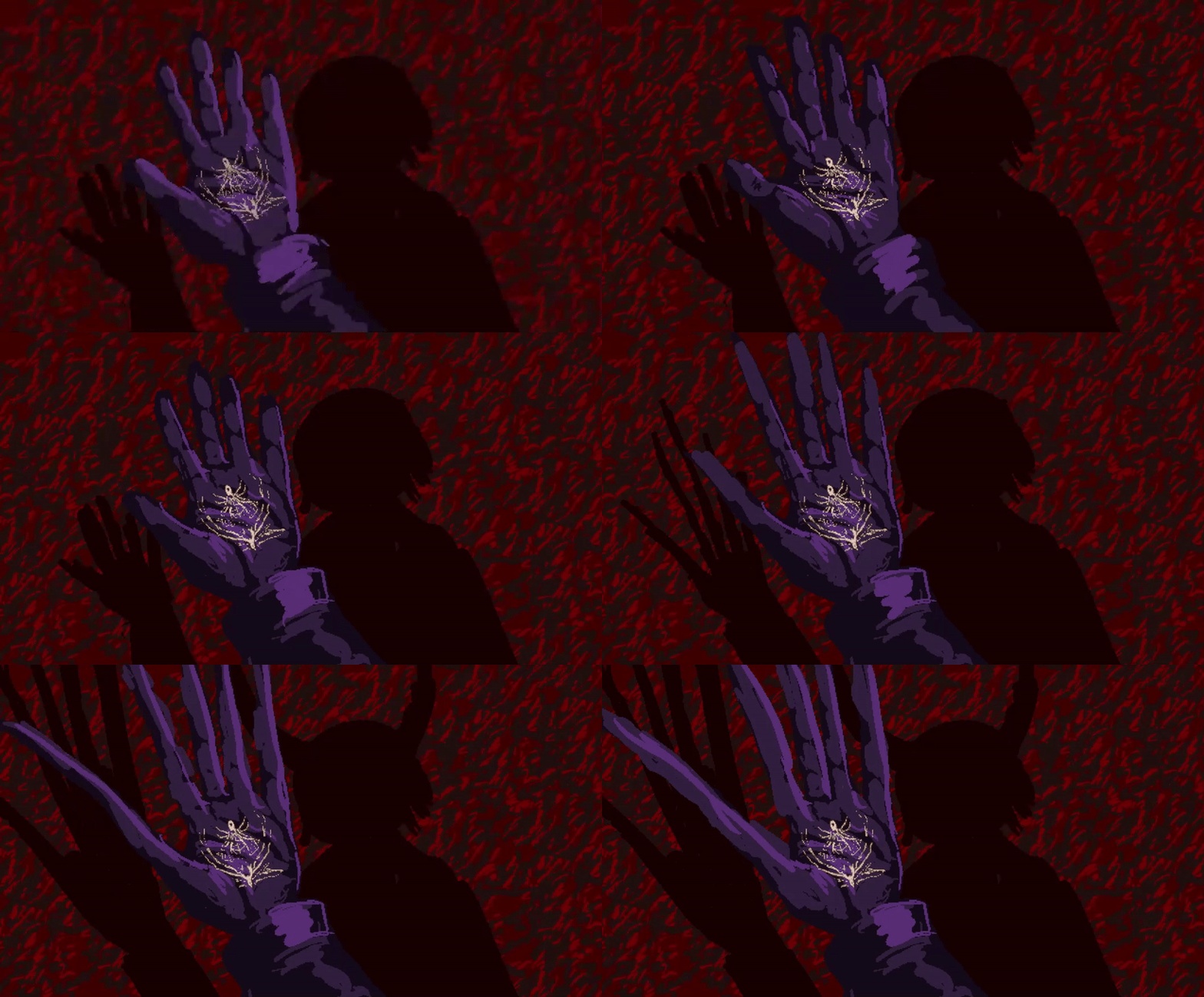
Despite officially just being the lead artist, I found myself stretched thin. Having learned how to use GDevelop (the initial proposal was to hardcode everything in HTML, which I didn’t see going well), I was doing the bulk of the programming in the first two weeks. Additionally, due to a lack of clear direction, I was intuitively designing the sprites based on my interpretation of the script, which meant working on the narrative and gameplay loop as well. This came to a head when it became clear that my idea of an engaging experience did not align with our narrative lead and producer. I recognized that reworking what we made would take less time than continuing to have directional conflicts, so I stepped back from creative and technical oversight to focus on drawing and animation. I communicated this to my producer, then told them that I need a list of assets to be done. Under new, focused direction, the project pivoted to a more straightforward visual novel. Once I got what I needed, I got to work and fully invested in asset protection. This yielded a more focused direction and involvement from my colleagues, and I was able to spend time to fully hand-animate instead of simple transform tool tricks, including fully animated ending cutscenes.
| © 2025 Yotei Kikuya |